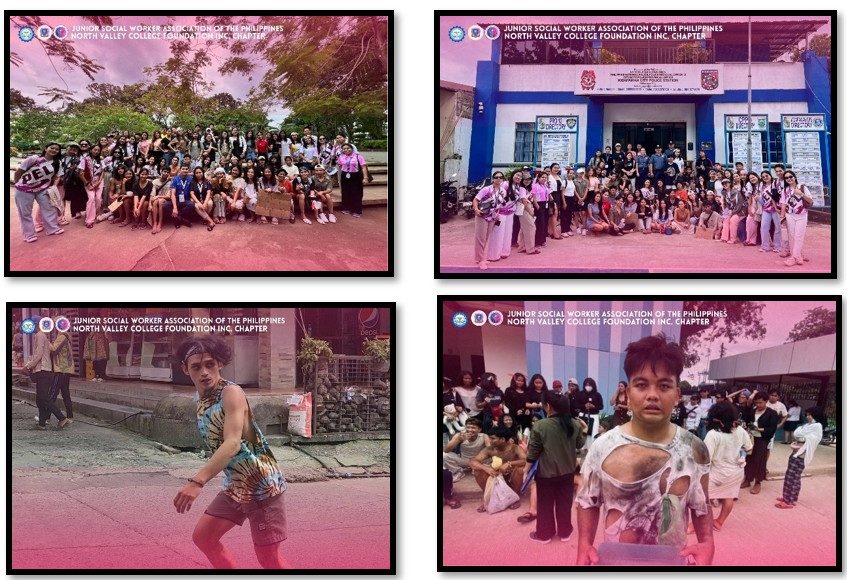



















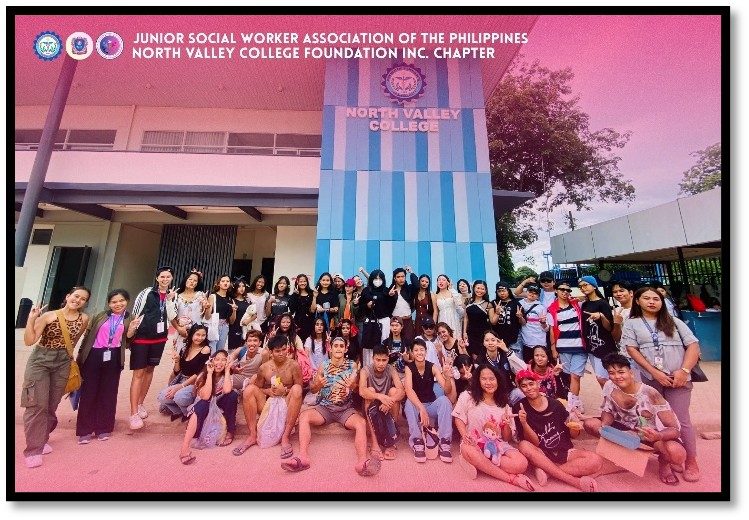
The Deviance Day Activity of the North Valley College – Social Work Department is designed to enhance the understanding of 2nd Year Social Work students on the concept of deviance and its relevance to social work practice. As future social workers, students must grasp how society constructs norms, labels behaviors as deviant, and responds through sanctions, stigma, or social control. This activity allows them to connect classroom theories such as Labeling Theory, Strain Theory, and Social Control Theory with real-life situations, strengthening their analytical and critical-thinking skills.
The activity also provides students with experiential learning that fosters empathy and self-awareness. By participating in situations where they may experience judgment, discomfort, or misinterpretation from others, students gain insight into how individuals labeled as “deviant” feel within society. This supports the development of nonjudgmental attitudes, respect for diversity, and sensitivity to the lived experiences of marginalized groups values central to the Social Work Code of Ethics.
Guided by Ms. Anabel Loreca, RSW, the activity is implemented in a structured and ethical manner, ensuring purposeful reflection and responsible participation. Through facilitated discussions and processing, students deepen their understanding of deviance not only as rule-breaking behavior but as a complex social phenomenon shaped by culture, power, and inequality. Overall, the Deviance Day Activity contributes to the holistic formation of future social workers by preparing them to engage with clients using compassion, critical awareness, and social justice principles.
Objectives:
- To deepen students’ understanding of the sociological concept of deviance by examining how norms are created, how certain behaviors become labeled as deviant, and how society responds through formal and informal sanctions.
- To enable students to apply sociological and social work theories such as Labeling Theory, Strain Theory, Differential Association, and Social Control Theory through experiential learning and direct observation of social reactions.
- To enhance students’ empathy and self-awareness by allowing them to experience or witness stigma, judgment, or stereotyping, thereby fostering nonjudgmental attitudes essential to ethical social work practice.
- To strengthen students’ critical-thinking and analytical skills by encouraging them to analyze the influence of culture, power structures, and social expectations on the construction of deviant identities.
- To promote reflection on social injustices and marginalization by helping students understand how deviant labels contribute to exclusion, discrimination, and inequality experienced by vulnerable groups.
- To prepare students for future professional practice by integrating experiential insights with social work values, particularly respect for human dignity, social justice, and advocacy for marginalized populations.
Highlights
The Social Work Department of North Valley College successfully conducted its Deviance Day Activity with the participation of 2nd Year Social Work students. The initiative aimed to provide an experiential understanding of deviant behavior by allowing students to temporarily assume roles commonly labeled as “deviant” in society. For one day, the students engaged in the activity by portraying various deviant identities such as individuals with drug addiction, persons with sexually related concerns, prostituted women, individuals experiencing schizophrenia, beggars, and other marginalized roles. This method enabled them to step into the shoes of people who often face stigma, judgment, and social exclusion.
To fully immerse in the experience, the students roamed around key areas in the City of Kidapawan, including the City Plaza, Mega Market, and different public and private offices. As they interacted with the environment and encountered various members of the community, they observed firsthand the reactions, assumptions, and criticisms directed toward their portrayed identities. Through these real-world interactions, students witnessed both subtle and explicit forms of social control, discrimination, and labeling that individuals categorized as “deviant” frequently encounter. The activity provided meaningful insights into the lived experiences of marginalized populations, highlighting the deep connection between social perception and human dignity. By reflecting on the judgments they received, students strengthened their empathy, self-awareness, and understanding of how societal norms shape behavior and identity. The Deviance Day Activity ultimately enhanced the students’ readiness for future social work practice, equipping them with a deeper appreciation of the importance of compassion, nonjudgmental attitudes, and advocacy in working with vulnerable and stigmatized groups.