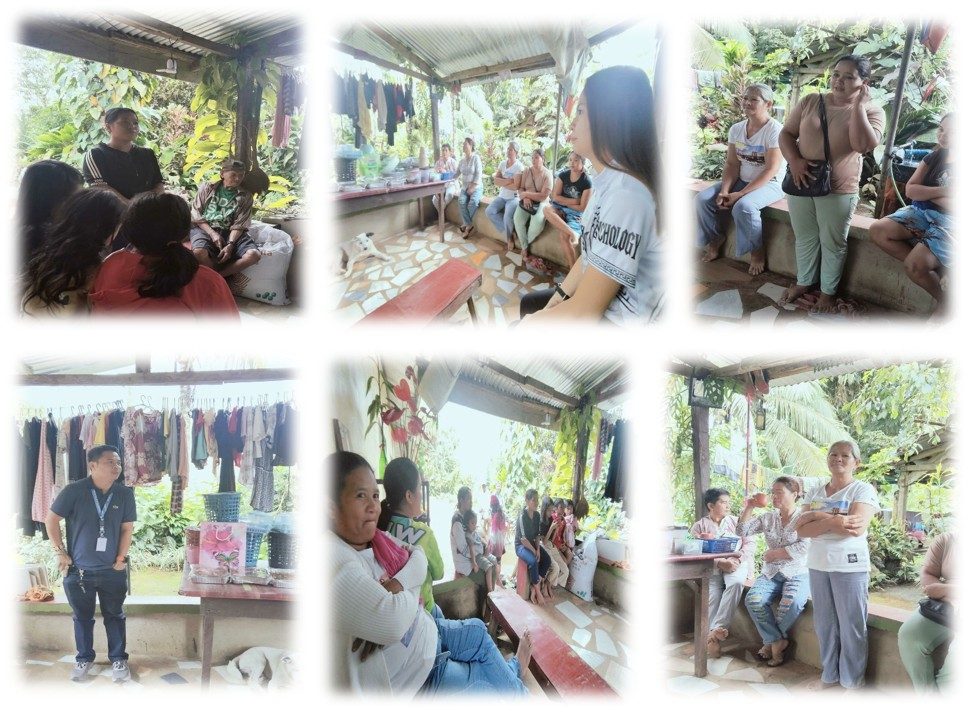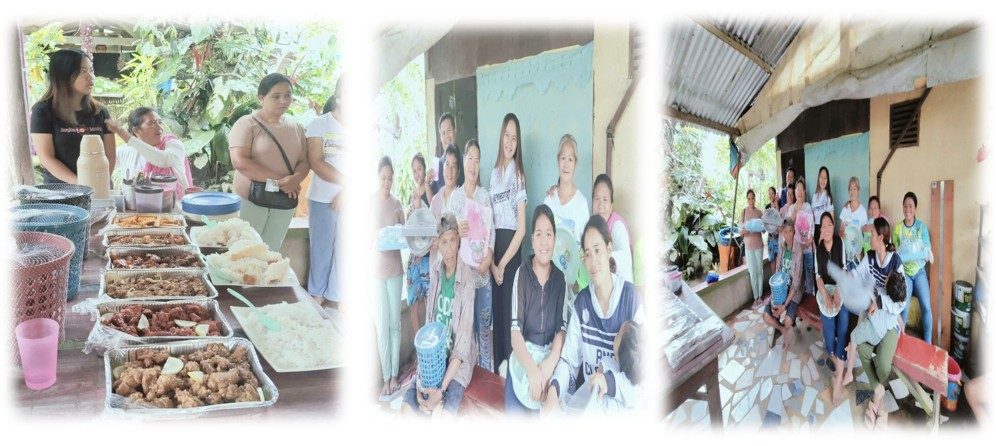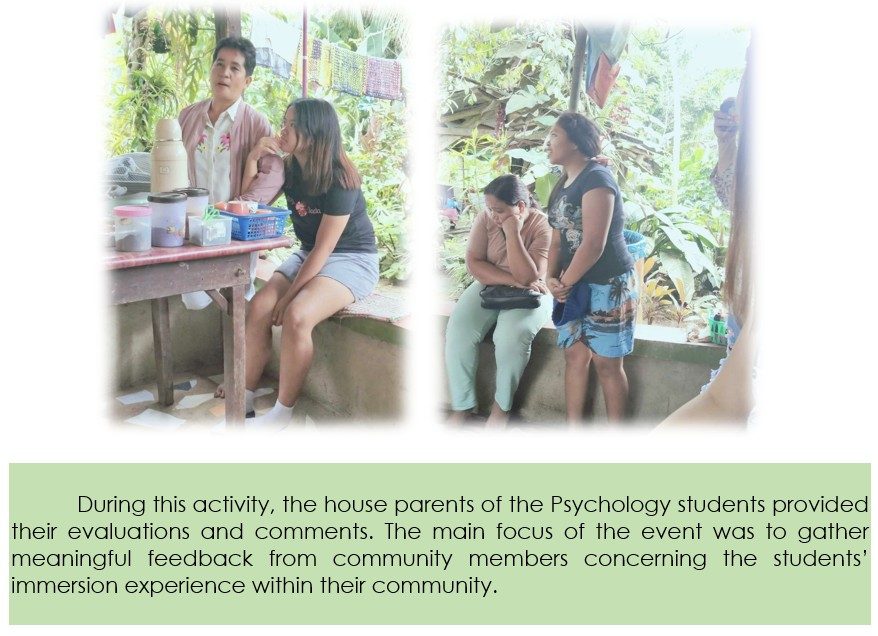


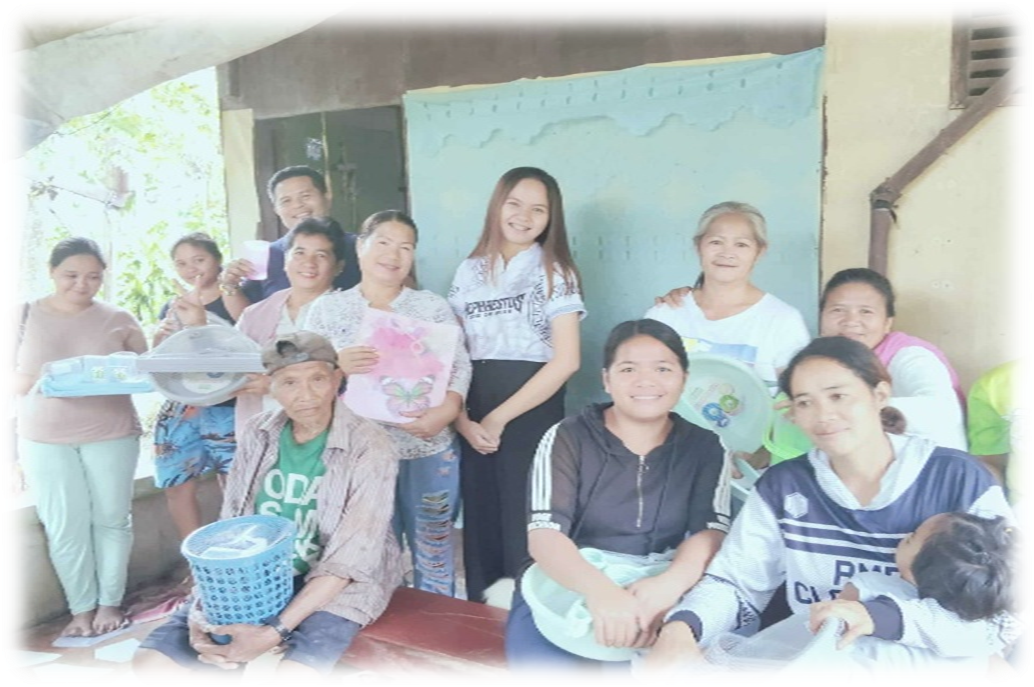
The community immersion program of the 4th Year BS Psychology students of North Valley College Foundation, Inc. continues to make a meaningful impactas reflected in the heartfelt evaluations and testimonies of the host families in Balabag, Kidapawan City, who welcomed the students into their homes from October 14–17, 2025.
During the post-immersion evaluation and assessment, the Ovu-Manobo families expressed deep gratitude and overwhelming satisfaction with the attitudes, behavior, and cultural sensitivity displayed by the students. Many shared that the short immersion created lasting bonds that felt “familial,” strengthening relationships between the academic community and the indigenous peoples of North Cotabato.
Host Families Feel “At Home” with Students
Parents described the students as respectful, responsible, and warm. These qualities created a natural sense of belonging in the household. Some families said the presence of the students brought joy to their homes and helped boost their emotional well-being.
Verbatim responses from parents include:
- “Wala gyud mi nagduha-duha sa ila. Murag anak namo sila sa ilang batasan ug pagrespeto.”
- “Ang presensya sa mga estudyante nakapahupay sa among kasubo ug kamingaw. Maayo kaayo sila maminaw sa among istorya.”
- “Dili lang sila bisita. Nakatabang sila sa among pang-adlaw-adlaw nga trabaho—sa uma, sa balay, bisan sa pag-atiman sa among mga bata.”
- “Kung pwede pa, gusto namo nga mulungtad pa sila ug dugay kay nalipay gyud mi sa ilang kaayo.”
- “Nagdako among kumpiyansa sa among kaugalingon kay naay nakig-uban ug nakig-istorya sa amo gikan sa eskwelahan. Dili namo malimtan ilang pagkabuotan.”
- “Gisinati namo nga mura sila’g tinuod nga sakop sa pamilya.”
These testimonies affirmed that the students embodied the values of humility, cultural sensitivity, empathy, and service which are core components of Filipino Psychology and community-based learning.
Students as Partners in Daily Community Life
Host families particularly appreciated the students’ willingness to immerse themselves in daily routines, helping in household chores, cooking, and participating in farming activities. Their openness to learn Ovu-Manobo practices earned the admiration of the elders and youth alike.
Parents emphasized the students’ accommodating demeanor, respectful language, and genuine desire to listen, making them effective cultural learners and community companions.
Recommendations: “Extend the Immersion Next Time”
Significantly, many parents recommended that future immersion programs be extended to a longer period, citing the strong relationships formed within just four days.
Sample recommendations:
- “Mas maayo unta ug dugay-dugay ang ilang pagpuyo aron mas daghan sila makat-unan ug mas daghan pud mi maistorya kanila.”
- “Ang tulo ka adlaw kulang kaayo. Daghan pa unta mi gusto ipakita ug ipatudlo sa ila.”
- “Mas maayo ug usa ka semana para mas ma-immerse gyud sila sa kultura namo.”
These sentiments reflect the mutual learning and cultural exchange that the immersion successfully fostered.
Alignment with the Sustainable Development Goals (SDGs)
The immersion program, along with the evaluation and assessment activities, strongly aligns with several United Nations Sustainable Development Goals, particularly:
SDG 4: Quality Education: By integrating experiential, culture-sensitive, and community-based learning, the program promotes transformative and holistic education.
SDG 10: Reduced Inequalities: Immersion strengthens relationships between indigenous communities and academic institutions, breaking cultural barriers and promoting inclusivity.
SDG 16: Peace, Justice & Strong Institutions: Through dialogue, cultural exchange, and trust-building, the program fosters peace-centered relationships and community empowerment.
SDG 17: Partnerships for the Goals:The collaboration between NVCF and the Ovu-Manobo communities stands as a model for effective community–academic partnerships supporting sustainable development.
A Continuing Commitment to Community and Culture
The host families’ overwhelmingly positive evaluation reaffirms NVCF’s commitment to developing professionals who are not only competent in their fields but are also empathetic, culturally grounded, and socially responsible.
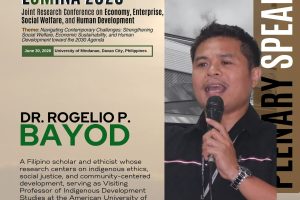
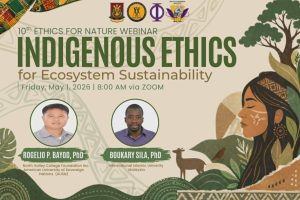
Dr. Rogelio Bayod, the course professor, said that this feedback will help strengthen future immersion initiatives: “This is the heart of Filipino Psychology – being with the people, learning from them, and growing through shared humanity.” As bonds between the college and Balabag’s indigenous communities deepen, the call to expand and extend the immersion programs signals a hopeful future for education that transforms both learners and communities.