



By: Rogelio P. Bayod
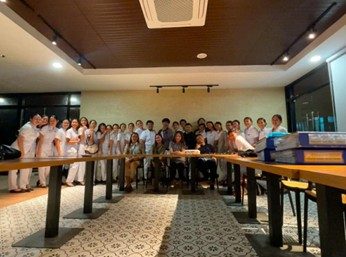
The BS Psychology students of North Valley College Foundation, Inc. formally presented the research outputs from their community immersion in Barangay Balabag, Kidapawan City on November 7, 2025 at the NVC Bew Cafeteria. The presentation marked the culminating activity of their four-day cultural immersion held last October 14–17, 2025, where students lived with Ovu-Manobo families to learn their lifeways, values, and community practices.
Serving as panel evaluators were Ms. Sweet Honey Mae Manansala, Program Head of the Psychology Department; Ms. Janice R. Banudan, Director of Community Extension Services; and Ms. Cindy Rhose Tingal, Assistant to the Vice President for Academic Affairs. The panel commended the students for producing research outputs that reflect deep cultural sensitivity, grounded observation, and genuine engagement with the indigenous community.
The students presented five major research themes emerging from their field experiences:
1. Cultural Practices and Rituals Related to Health and Healing
The first group documented the rich tapestry of Ovu-Manobo traditional health practices, including the use of herbal medicine, ritual offerings, and the significant role of the balyan (healer). Students highlighted how wellness is perceived holistically, integrating body, spirit, environment, and community. Rituals for protection and healing, as well as taboos that preserve social and bodily balance, were emphasized as integral to the community’s health worldview.
2. Mental Health and Community Life
Another team explored indigenous coping mechanisms and community-centered approaches to emotional well-being. Their findings revealed that mental health is deeply linked to spirituality, ancestor beliefs, and collective support systems. The students shared how storytelling, communal gatherings, and rituals provide psychological grounding, demonstrating that mental health is not only individual but also relational and spiritual.
3. Peace and Conflict Resolution among the Ovu-Manobo
The third research theme focused on traditional governance and conflict resolution rooted in batasan (customary law). Students observed how elders play a central role in mediating disputes, ensuring justice, and maintaining communal harmony. The participatory decision-making process, anchored on respect, dialogue, and ancestral wisdom, serves as a model for peaceful coexistence.
4. Environmental Ethics and Sustainable Practices
Another group highlighted the Ovu-Manobo’s deep environmental ethic, reflected in land stewardship, sustainable farming practices, and rituals honoring the forest, land, and rivers. Their research underscored the community’s spiritual relationship with nature, showing that environmental protection is not just practical but sacred.
5. Education and Intergenerational Knowledge Transmission
The final group documented how elders, parents, and storytelling shape the community’s indigenous education system. Oral tradition remains a powerful tool for cultural continuity, while formal schooling is seen as both an opportunity and a challenge. Students emphasized the need for culturally responsive education that respects indigenous knowledge systems.
Ms. Manansala praised the outputs for being “intellectually grounded yet heartfelt,” noting how the immersion enabled students to understand psychology beyond western frameworks. Ms. Banudan commended the students’ appreciation of indigenous resilience, while Ms. Tingal highlighted the importance of documenting cultural practices as part of NVC’s commitment to community engagement and cultural preservation.
The research presentation showcased not only the academic growth of the psychology students but also their deepened cultural awareness, affirming that the wisdom of the margins can enrich psychological knowledge and transform future practitioners into more compassionate, culturally attuned professionals. The event stands as a testament to NVC’s mission: education rooted in community, guided by respect, and committed to service.