






I. Participatory Action Research in the Context of COPAR
Participatory Action Research (PAR) is a collaborative and community-centered approach that actively involves community members and stakeholders in identifying problems, planning interventions, implementing actions, and reflecting on outcomes. In the context of the Community Organizing Participatory Action Research (COPAR) exposure of North Valley College Foundation, Incorporated, PAR was applied as both a learning strategy for nursing students and an empowerment tool for the community.
Through community immersion, dialogue, and shared decision-making, students did not function merely as observers but as partners of the community. This approach ensured that the identified problems and corresponding solutions were grounded in the actual needs, experiences, and priorities of the residents, consistent with the principles of primary health care and community participation.
II. Identified Community Problem: Unclean and Unhealthy Surroundings
Based on systematic observation, community interaction, and data gathered during immersion, the primary problem identified was the presence of unclean and unhealthy surroundings. Improper waste disposal, scattered garbage, and limited adherence to proper sanitation practices were evident in several areas of the community.
These environmental conditions were recognized as unhealthy and unsafe, posing a threat to the well-being of residents. Both students and community members acknowledged that poor environmental sanitation contributed to the persistence and potential increase of preventable diseases.
III. Health Risks Associated with Poor Sanitation
An evidence-based assessment revealed that unclean surroundings significantly increase the risk of communicable and vector-borne diseases. Accumulated waste and stagnant water serve as breeding grounds for mosquitoes, increasing the likelihood of dengue and other mosquito-borne illnesses. Poor sanitation also heightens the risk of gastrointestinal infections, skin diseases, and other health concerns related to unsafe environmental conditions.
These risks underscored the urgent need for preventive measures focused on environmental cleanliness and community awareness, aligning with public health principles of disease prevention and health promotion.
IV. Student-Led Interventions Based on Community Immersion
Guided by the PAR framework, nursing students implemented interventions that directly addressed the identified problem:
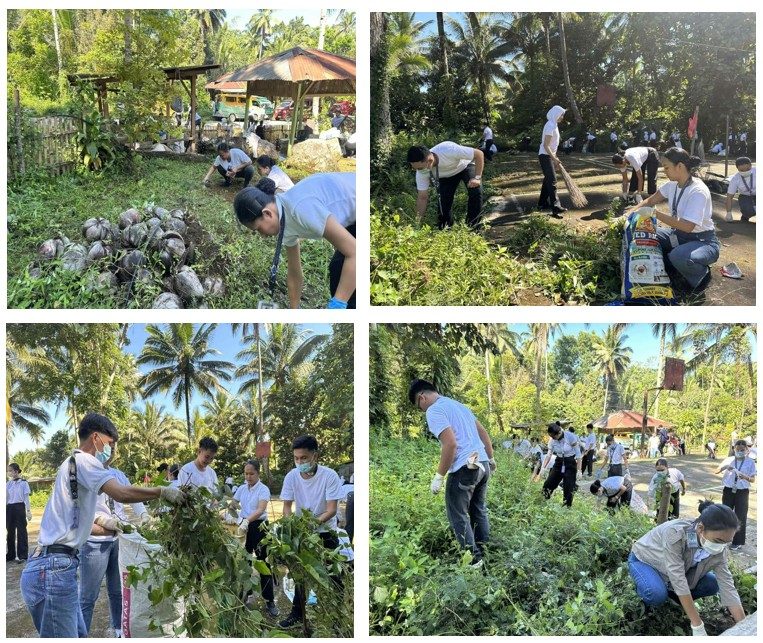
- Environmental Clean-Up Drive
As a direct action output of the participatory process, students, together with community members, conducted an environmental clean-up drive. This activity aimed to immediately reduce environmental hazards, promote cleanliness, and demonstrate collective responsibility in maintaining a healthy community.
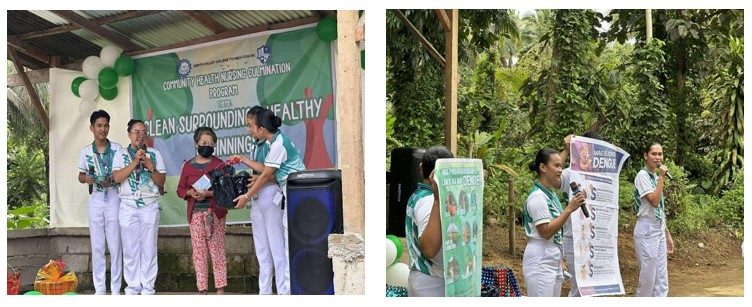
- Health Education on Cleanliness, Sanitation, and Disease Prevention
Students conducted health teaching sessions focusing on the importance of maintaining clean surroundings, proper waste disposal, personal hygiene, and sanitation. The education emphasized the link between environmental cleanliness and disease prevention, particularly in reducing the risk of dengue, rabies-related exposure, and sanitation-related illnesses.
V. Community Participation, Empowerment, and Sustainability
Central to the PAR process was active community participation. Residents, barangay officials, and barangay health workers were involved in planning and implementing the interventions, fostering a sense of shared responsibility and ownership. This collaborative approach empowered community members to take an active role in sustaining environmental sanitation practices beyond the duration of the COPAR exposure.
By promoting awareness, participation, and accountability, the interventions encouraged long-term behavioral change and sustainability. The community was not treated as passive recipients of service but as capable partners in promoting and maintaining a healthy environment.
Identified Community Problem
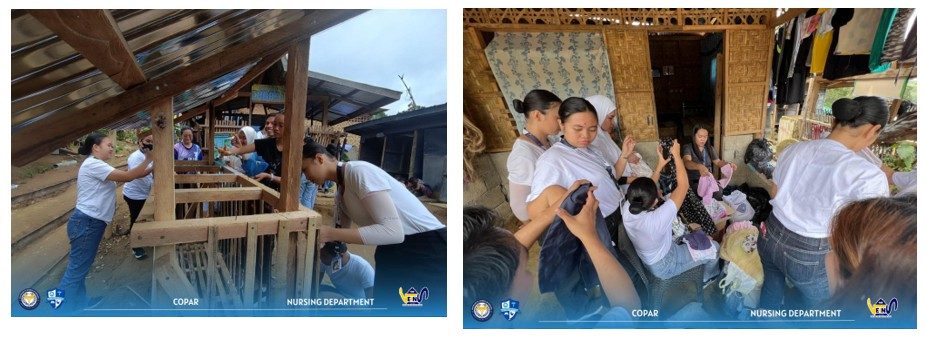
The community exhibits inadequate environmental sanitation and substandard housing structures, as evidenced by exposed soil, unfinished or poorly constructed dwellings, and the absence of organized waste management systems. These conditions increase the risk of environmental hazards and create favorable settings for communicable and vector-borne diseases. Limited access to safe and clean surroundings compromises the overall health and safety of community residents.
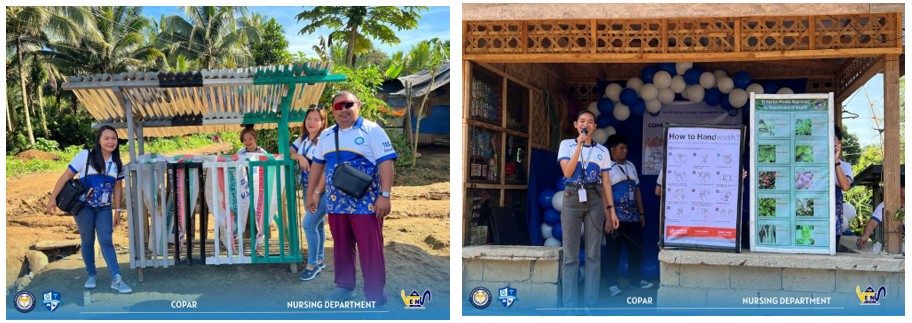
Implemented Community-Based Solution
Through Community Organizing Participatory Action Research (COPAR), nursing students, in collaboration with community members, initiated environmental improvement activities, including clean-up efforts and basic structural organization of communal spaces. In parallel, health education sessions were conducted to promote proper sanitation, cleanliness, and disease prevention practices. This participatory approach empowered residents to take shared responsibility for maintaining a healthier environment, fostering sustainability and long-term community health improvement.
VI. Conclusion
The Participatory Action Research outputs of the COPAR exposure at North Valley College demonstrated the effectiveness of collaborative, action-oriented approaches in addressing community health concerns. By identifying unclean and unhealthy surroundings as a priority problem and responding through environmental clean-up and health education, students were able to translate theory into meaningful community action.
Overall, the PAR process strengthened community engagement, enhanced student learning, and reinforced the vital role of nurses in health promotion, disease prevention, and sustainable community development.