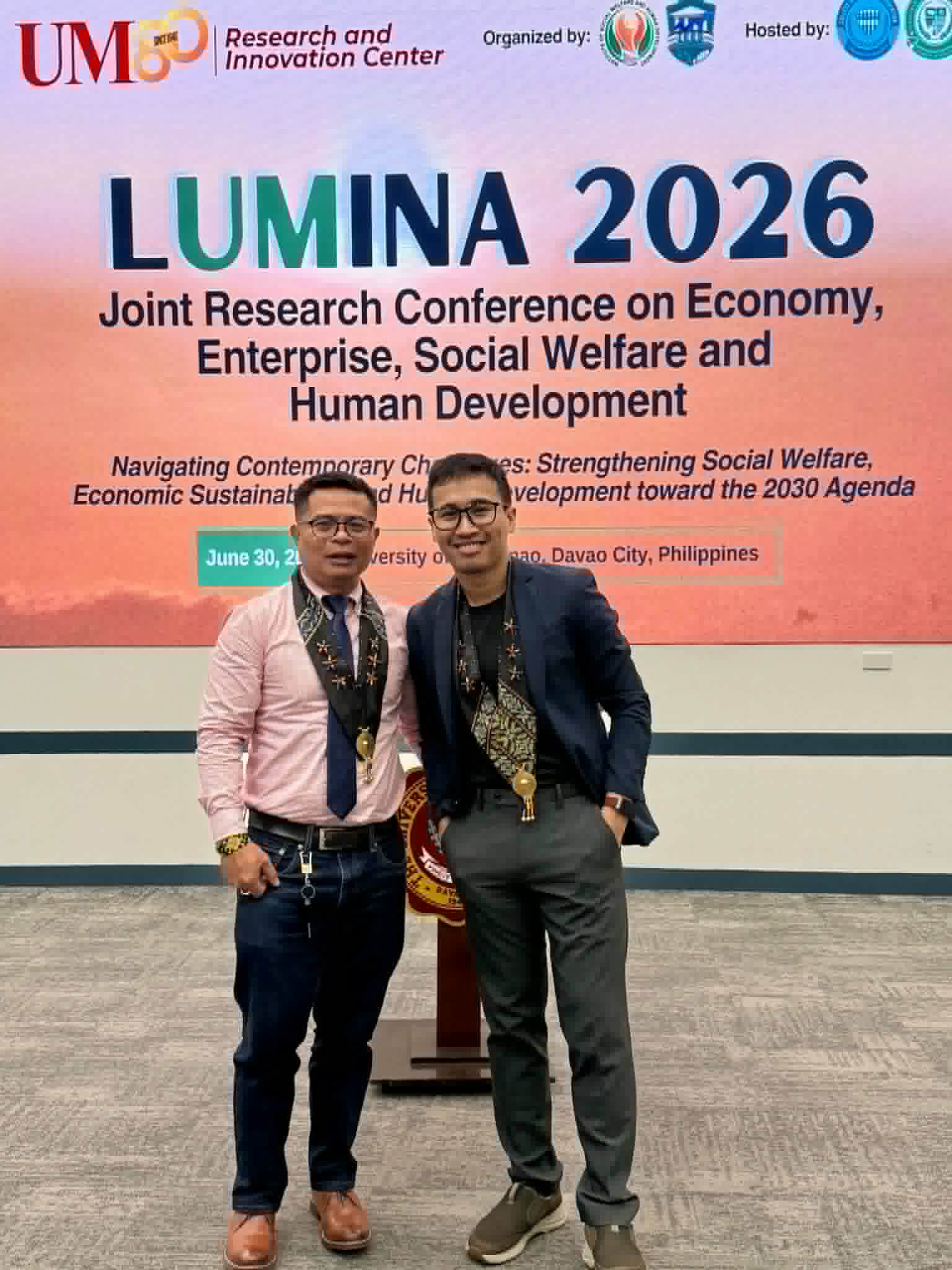

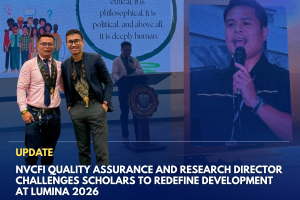
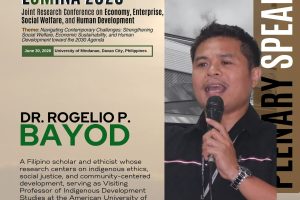




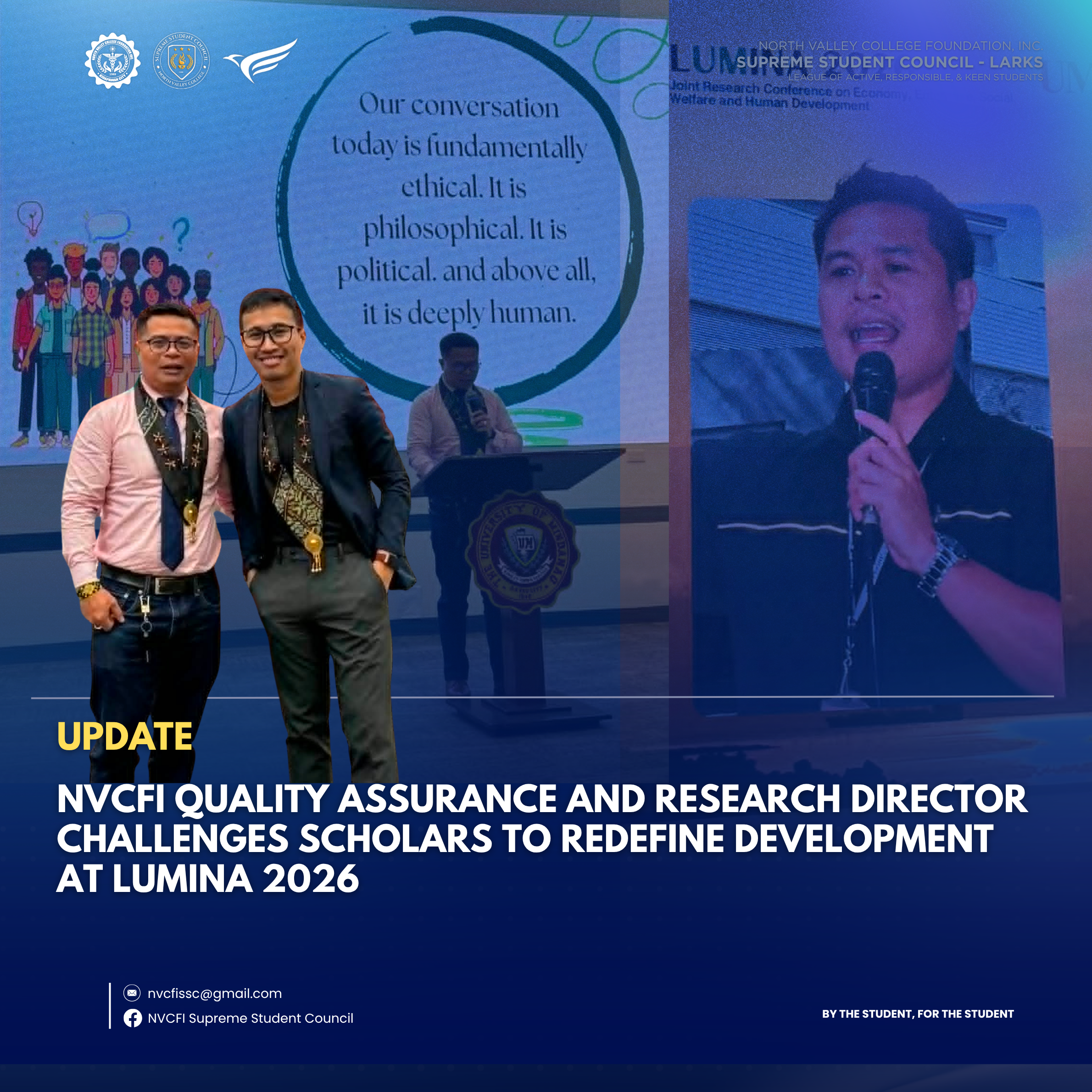
Development should no longer be measured solely by economic growth, infrastructure, or technological advancement. Instead, it must be grounded on human dignity, peace, social justice, and ecological responsibility” This was the compelling message delivered by Dr. Rogelio P. Bayod, Quality Assurance and Research Director of North Valley College Foundation, Inc. (NVCFI), during LUMINA 2026 held at the University of Mindanao, Davao City, where he served as one of the invited resource speakers. His lecture, entitled “Beyond Development: Reclaiming Humanity, Peace, and Ecological Justice in the Anthropocene,” challenged educators, researchers, students, and development practitioners to critically examine the dominant models of development in today’s rapidly changing world. Drawing from philosophy, ethics, sustainability studies, indigenous knowledge systems, and peace studies, Dr. Bayod argued that humanity is living in the Anthropocene—an era in which human activities have become the primary force shaping the planet’s ecosystems. While remarkable economic and technological achievements have transformed societies, these have often come at the expense of environmental destruction, widening social inequalities, armed conflicts, and the erosion of human values. “We cannot continue celebrating development if people remain hungry, communities remain divided, and nature continues to suffer,” Dr. Bayod emphasized. “True development is measured by how we uphold human dignity, build peaceful societies, protect the environment, and ensure justice for present and future generations.” He further stressed. Throughout his presentation, Dr. Bayod inspired participants to move beyond conventional indicators such as Gross Domestic Product (GDP) and instead embrace a more holistic vision of progress, one that integrates economic prosperity with ethical governance, ecological stewardship, social inclusion, and human flourishing. He challenged the audience with a series of thought-provoking questions:
• Are our educational institutions producing professionals who merely contribute to economic growth, or leaders who promote justice and compassion?
• Can development truly be called progress if it destroys forests, rivers, indigenous communities, and future generations?
• How can universities become catalysts for peacebuilding, sustainability, and ethical leadership?
These reflections resonated deeply with participants, encouraging them to reconsider their personal and professional responsibilities in shaping a more humane and sustainable future. Dr. Bayod likewise highlighted the crucial role of higher education institutions in responding to today’s global challenges. He encouraged universities to become centers of transformative learning that nurture critical thinkers, ethical leaders, peace advocates, and environmental stewards capable of addressing complex social realities. He underscored that research should not merely produce publications but should generate meaningful solutions that uplift marginalized communities, influence public policy, and promote sustainable development. According to him, education must remain anchored on service to humanity rather than the pursuit of economic gains alone. Participants described the session as intellectually stimulating and deeply inspiring, noting that the lecture successfully integrated philosophical reflection with practical implications for education, governance, research, and community development. In fact, many participants asked Dr. Bayod’s email address so they can communicate to him directly and ask for his published materials. The invitation extended to Dr. Bayod also reflects the growing recognition of the academic expertise and leadership being cultivated at North Valley College Foundation, Inc. His participation in a regional academic gathering demonstrates that NVCFI continues to produce scholars whose research, leadership, and advocacy contribute meaningfully to national and international academic discourse. As NVCFI strengthens its commitment to research excellence, quality assurance, and community engagement, the institution continues to build a pool of highly qualified experts capable of serving as keynote speakers, plenary lecturers, consultants, researchers, and resource persons in conferences, seminars, and academic forums both in the Philippines and abroad. The participation of its faculty members in prestigious scholarly events affirms the institution’s growing reputation as an emerging center for academic excellence and transformative leadership. Through lectures such as “Beyond Development: Reclaiming Humanity, Peace, and Ecological Justice in the Anthropocene,” Dr. Bayod continues to inspire educators and future leaders to envision a world where development is defined not only by wealth and innovation but also by compassion, justice, peace, and care for our common home. His message serves as a powerful reminder that the future of humanity depends not merely on how much societies produce, but on how faithfully they protect human dignity, promote peace, and safeguard the Earth for generations yet to come.