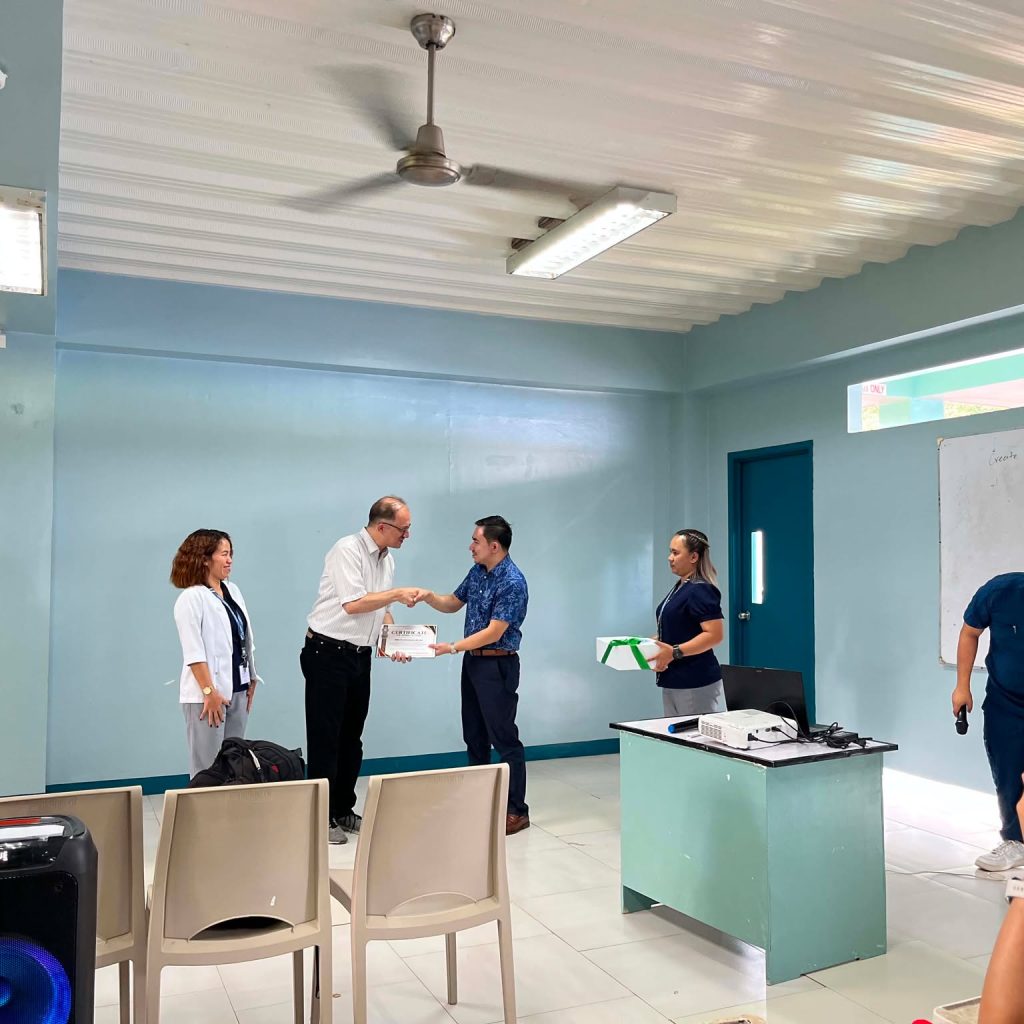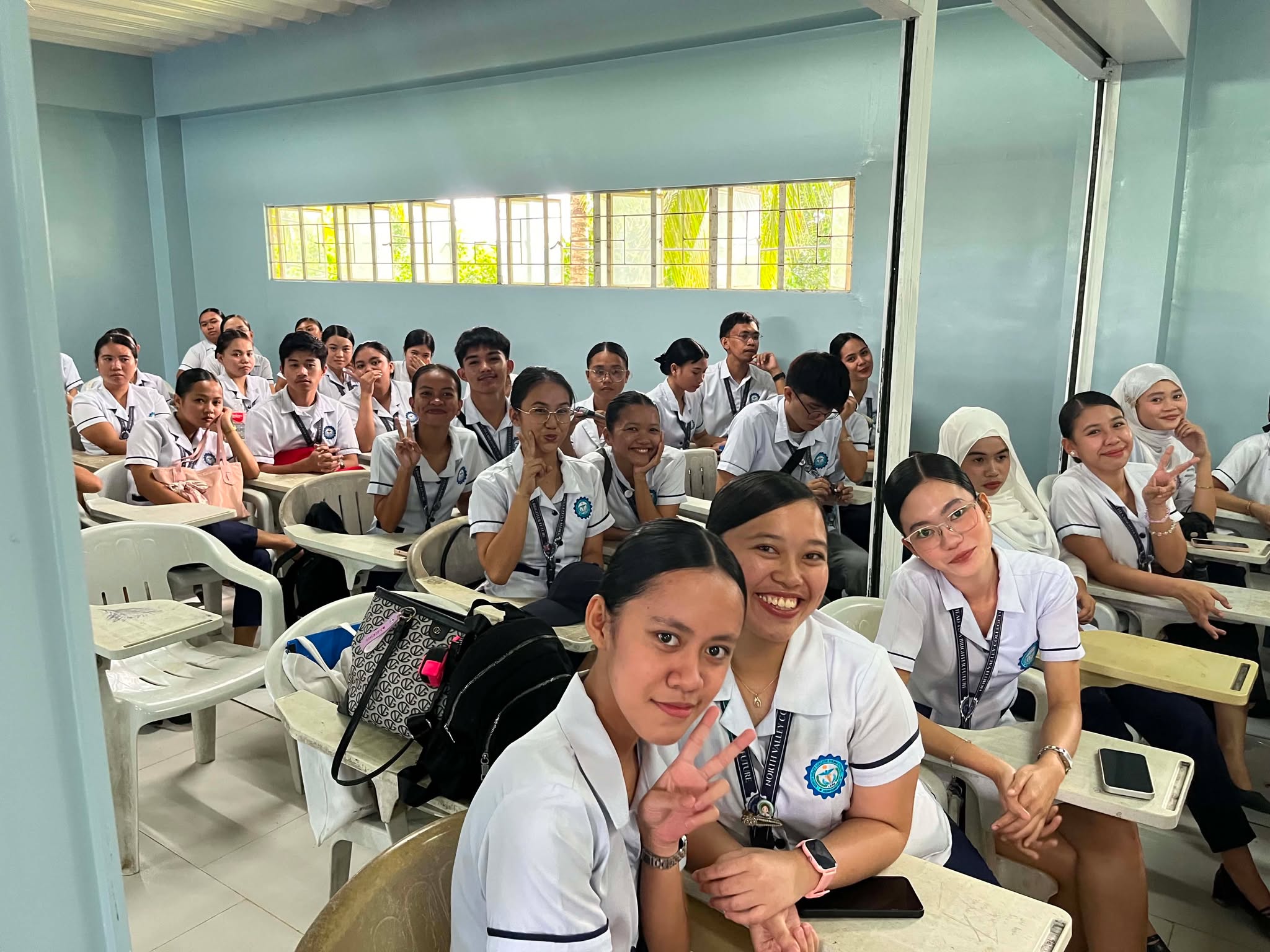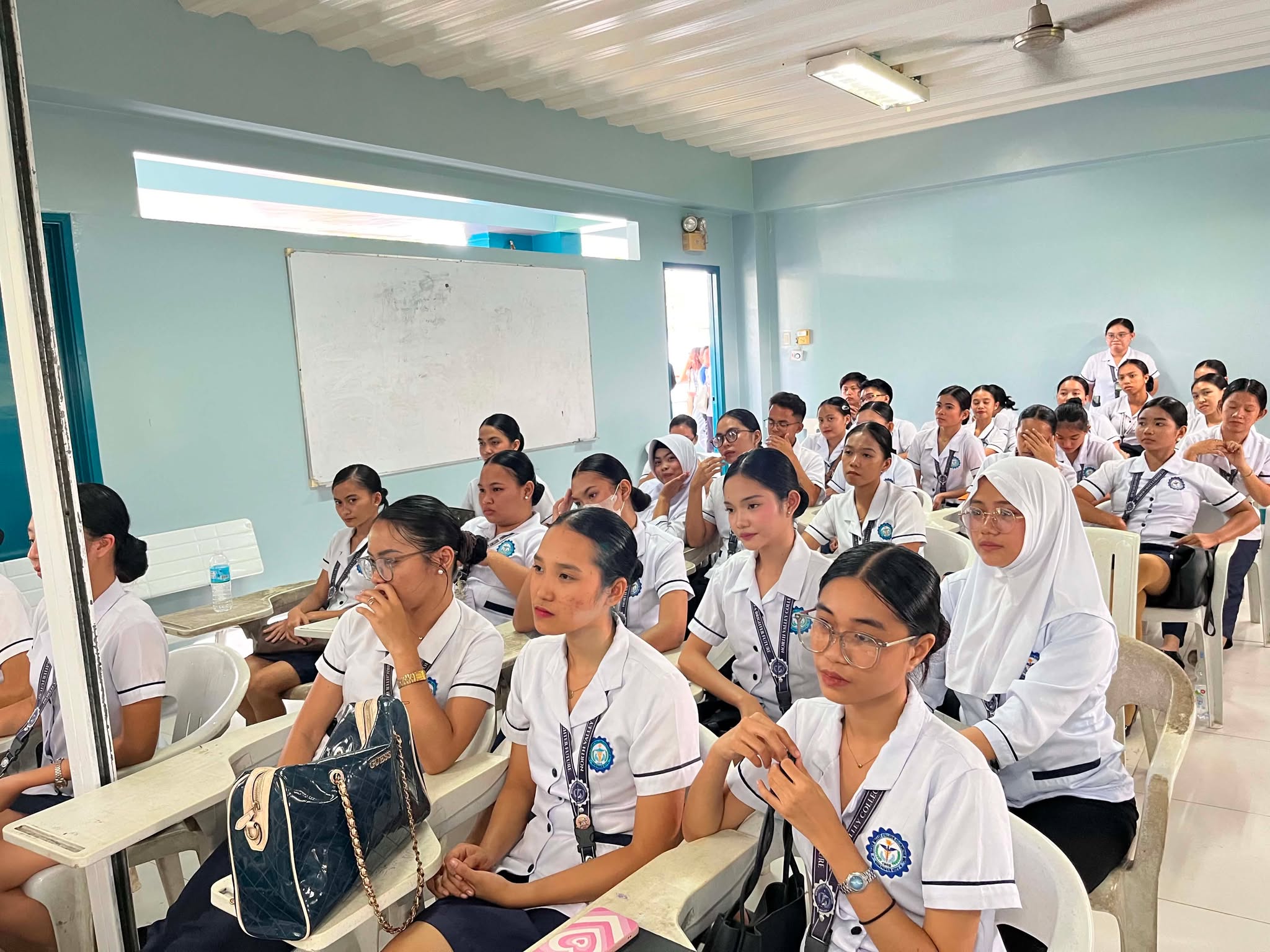
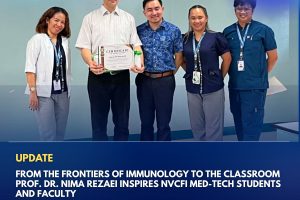
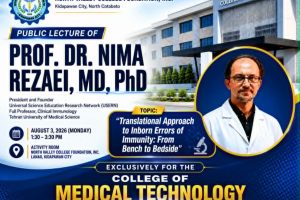

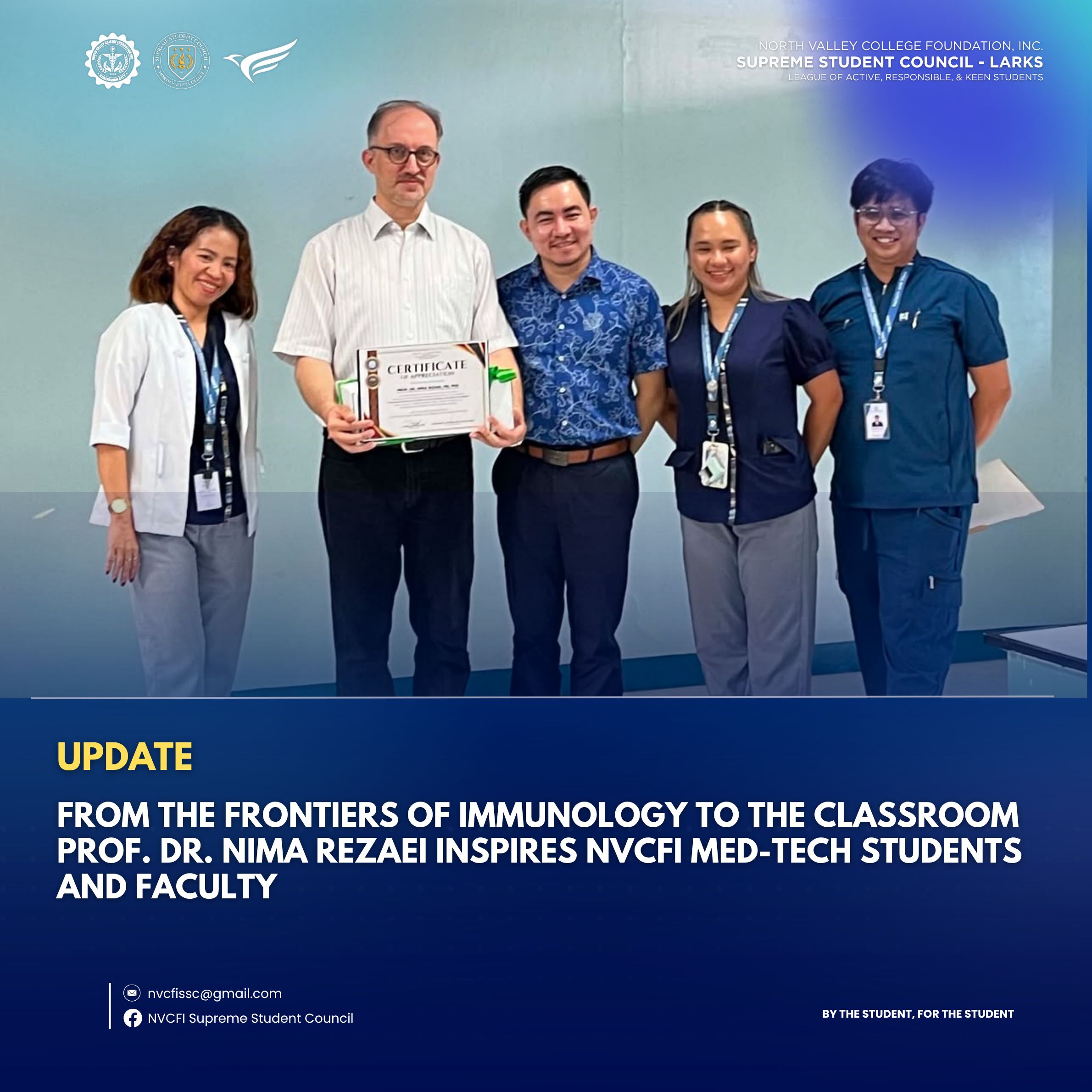
The classrooms of North Valley College Foundation, Inc. (NVCFI) became a venue for global scientific exchange as Prof. Dr. Nima Rezaei, MD, PhD, a distinguished physician-scientist and internationally recognized expert in immunology and biomedical research from Tehran University, shared his expertise with Medical Laboratory Science students and faculty during a special public talk at the institution.
The engagement formed part of NVCFI’s continuing effort to expose its students and faculty to leading scholars whose work transcends national and disciplinary boundaries. For the Med-Tech community, the visit offered a rare opportunity to listen directly to a scientist whose career has been deeply immersed in the study of immunology, human health, and research.
Meeting a Global Expert in Immunology
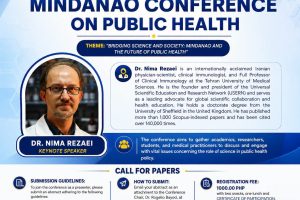
Prof. Dr. Nima Rezaei is a physician-scientist and academic associated with Tehran University of Medical Sciences in Iran. He is widely recognized for his work in immunology, particularly in the fields of primary immunodeficiencies, immune dysregulation, infectious diseases, and translational biomedical research.
Beyond his scientific work, Prof. Rezaei has also become known for advancing international scientific collaboration and research networks. He is the founder and president of the Universal Scientific Education and Research Network (USERN), an international initiative that promotes scientific education, interdisciplinary collaboration, and the development of young researchers across countries.
His presence at NVCFI therefore represented more than the delivery of an academic lecture. It created a bridge between a local higher education institution in Mindanao and the broader international scientific community, allowing students to encounter firsthand the possibilities that research can open beyond the walls of the classroom.
Understanding the Immune System: From Basic Science to Human Health
At the center of Prof. Rezaei’s public talk was immunology, a field fundamental to the education and future professional practice of Medical Technology students.
Immunology examines the complex biological mechanisms through which the human body recognizes, responds to, and protects itself from pathogens and other threats. For future medical laboratory scientists, understanding these mechanisms is essential because many laboratory investigations are directly connected to the immune system, including diagnostic testing for infectious diseases, autoimmune conditions, immunodeficiencies, allergies, and other disorders.
Prof. Rezaei’s discussion provided students with an opportunity to appreciate immunology not simply as a subject contained in a curriculum, but as a rapidly developing scientific field connected to real-world health challenges. His expertise demonstrated how fundamental scientific knowledge can be transformed into diagnostic approaches, clinical applications, and innovative research.
The lecture also emphasized the importance of scientific inquiry. For students preparing to enter the medical laboratory profession, research is not merely an academic requirement. It is a means through which new diagnostic methods are developed, diseases are better understood, and existing approaches to patient care are continually improved.
Inspiring the Next Generation of Researchers
For NVCFI students, perhaps one of the most significant lessons from Prof. Rezaei’s engagement was the realization that scientific excellence is not limited by geography.
Coming from an institution in Mindanao, students are often introduced to scientific discoveries through textbooks, journals, and online resources. Having an internationally recognized scientist physically engage with them creates a different kind of learning experience—one that makes the global scientific community more tangible and accessible.
Prof. Rezaei’s interaction with the students and faculty consequently served as an invitation to look beyond the traditional boundaries of undergraduate education. It encouraged students to see themselves not merely as future laboratory practitioners, but potentially as researchers, innovators, and contributors to the advancement of health sciences.
NVCFI’s Commitment to Quality, Research, and Global Engagement
The initiative is part of the broader institutional direction being pursued by NVCFI through its Quality Assurance an Research Office.
For NVCFI, quality assurance is not confined to compliance, documentation, accreditation, or institutional standards. It is increasingly understood as a culture that connects teaching, research, innovation, professional development, and meaningful engagement with the wider academic community.
The invitation and engagement with Prof. Rezaei reflect this vision. By bringing distinguished international scholars into direct conversation with students and faculty, NVCFI seeks to enrich the academic environment and strengthen the institution’s research culture.
The initiative also complements the institution’s continuing efforts to establish stronger research systems, encourage faculty and student research, develop external academic partnerships, and provide opportunities for scholarly exchange. Such activities are particularly important for an emerging higher education institution seeking to position itself not only as a provider of affordable and accessible education but also as a contributor to knowledge production and innovation.
Through the leadership of its Quality Assurance and Research Office, NVCFI is gradually cultivating an academic culture where quality is connected to inquiry, research is connected to social responsibility, and education is connected to the global community.
From Kidapawan to the Global Scientific Community
Prof. Rezaei’s visit ultimately represented a meeting of two important aspirations: the aspiration of students to learn from the world’s leading scientists and the aspiration of NVCFI to build an institution capable of participating meaningfully in global academic conversations.
For the Medical Technology students who listened to an internationally recognized immunologist, the experience offered more than another academic lecture. It provided a glimpse into the possibilities that await those who pursue science with curiosity, discipline, and a commitment to improving human health. For NVCFI, the event reaffirmed an institutional conviction: quality education becomes more meaningful when students are connected to the people, ideas, and discoveries shaping the future of science.