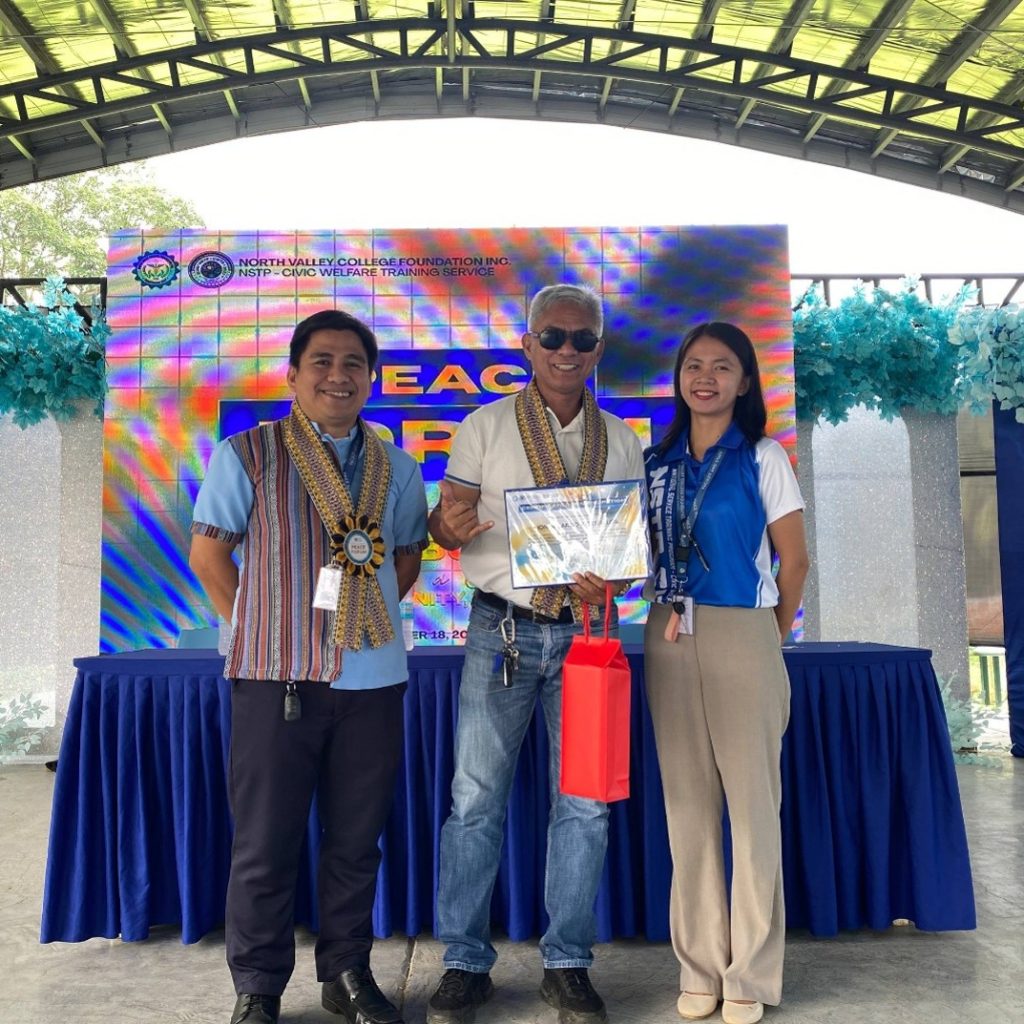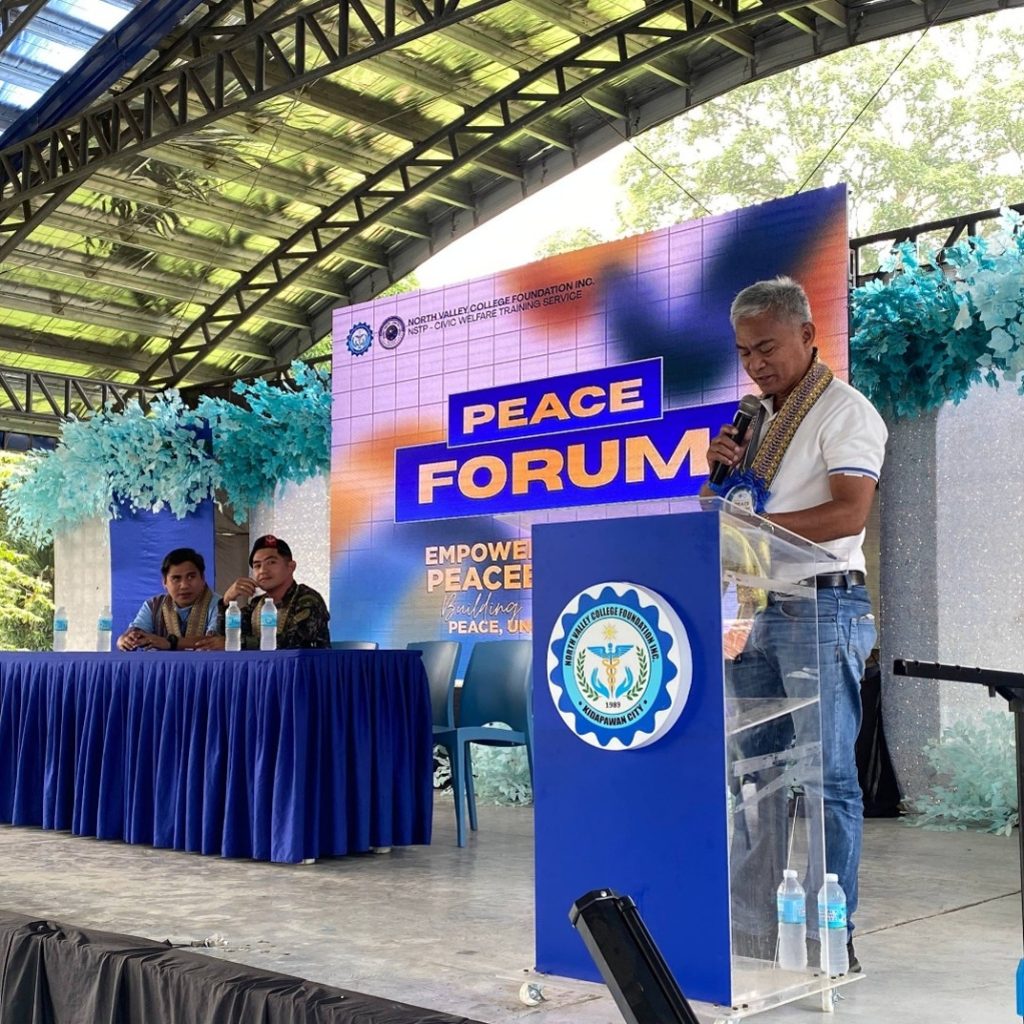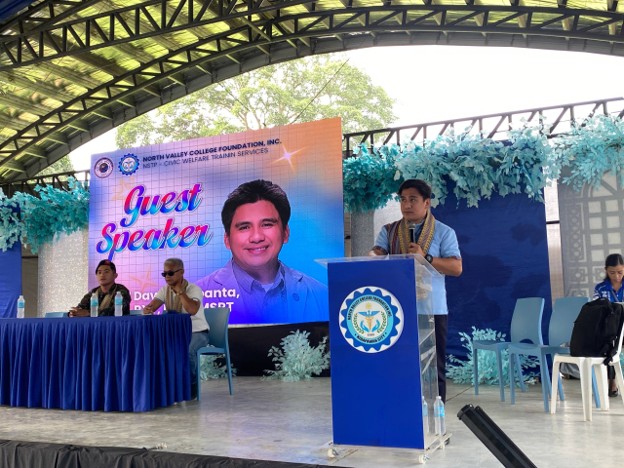



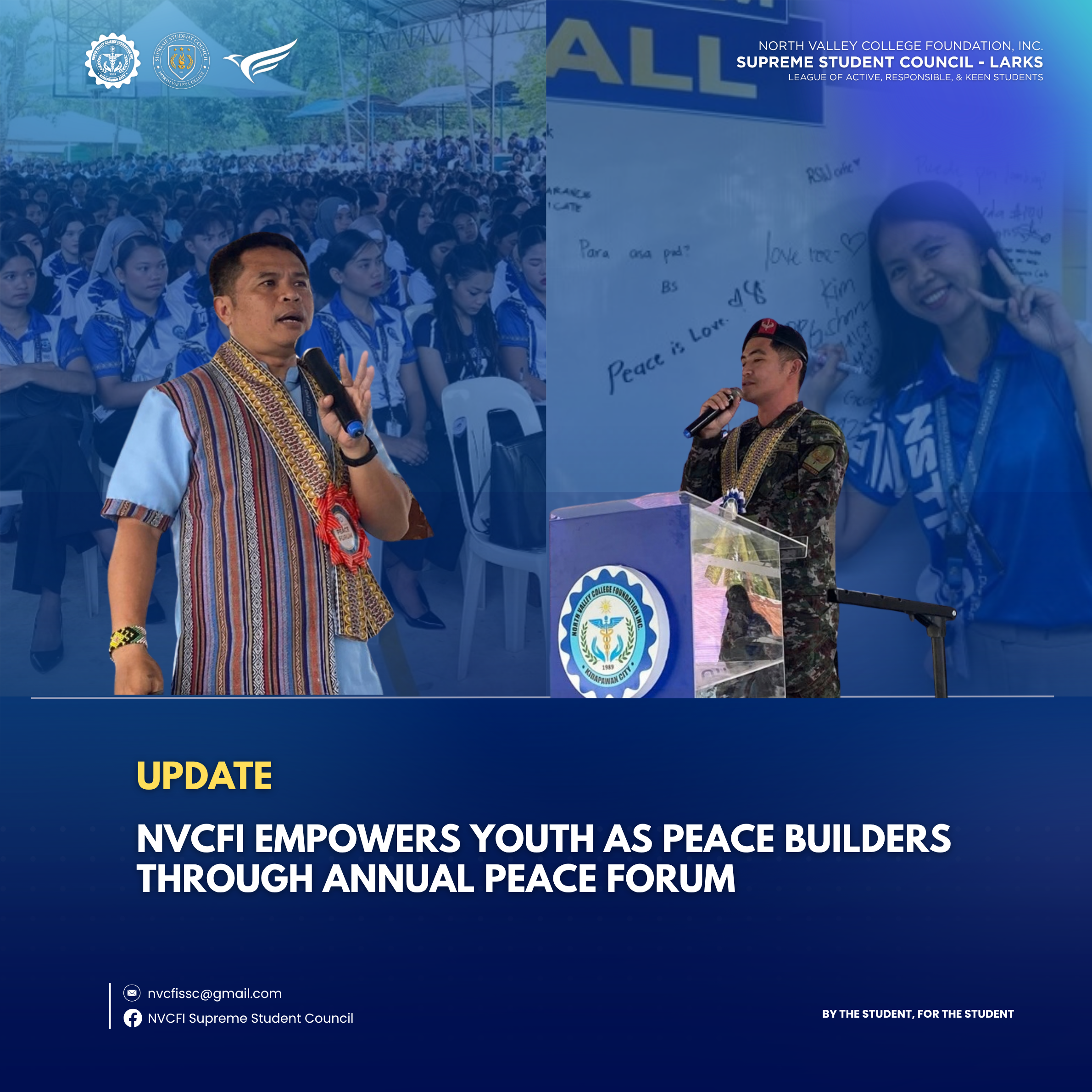
On September 18, 2026 at North Valley College, young people took center stage in conversations on peace, human rights, community development, and social responsibility as North Valley College Foundation, Inc. (NVCFI) conducted its annual Peace Forum, dubbed “Empowering Youth Peace Builders,” today.
Organized by the NSTP Department, headed by NSTP Coordinator Ma’am Jhona Joy Paraon Bergado, together with the department’s dynamic and supportive faculty members, the forum brought students and community partners into a meaningful dialogue on some of the most pressing social concerns confronting communities today.
The annual activity reflects NVCFI’s continuing commitment to developing students not only as competent professionals but also as socially conscious citizens capable of contributing to peace, justice, and sustainable community development.
Building a culture of peace through education
The Peace Forum is envisioned as more than a one-day academic activity. It serves as a platform for raising consciousness among students and community partners about social realities, encouraging critical reflection, and challenging young people to see themselves as participants in creating positive change.
For NVCFI, an academic institution has a responsibility that extends beyond the classroom. Education becomes meaningful when knowledge is translated into responsible citizenship, community engagement, respect for human dignity, and concrete efforts toward peace and development.
This year’s theme, “Empowering Youth Peace Builders,” resonates strongly with the global Youth, Peace and Security (YPS) agenda. The United Nations recognizes young people as important partners and leaders in preventing conflict, building peace, and sustaining peaceful and inclusive societies.
Human rights, rule of law, and preventing violent extremism
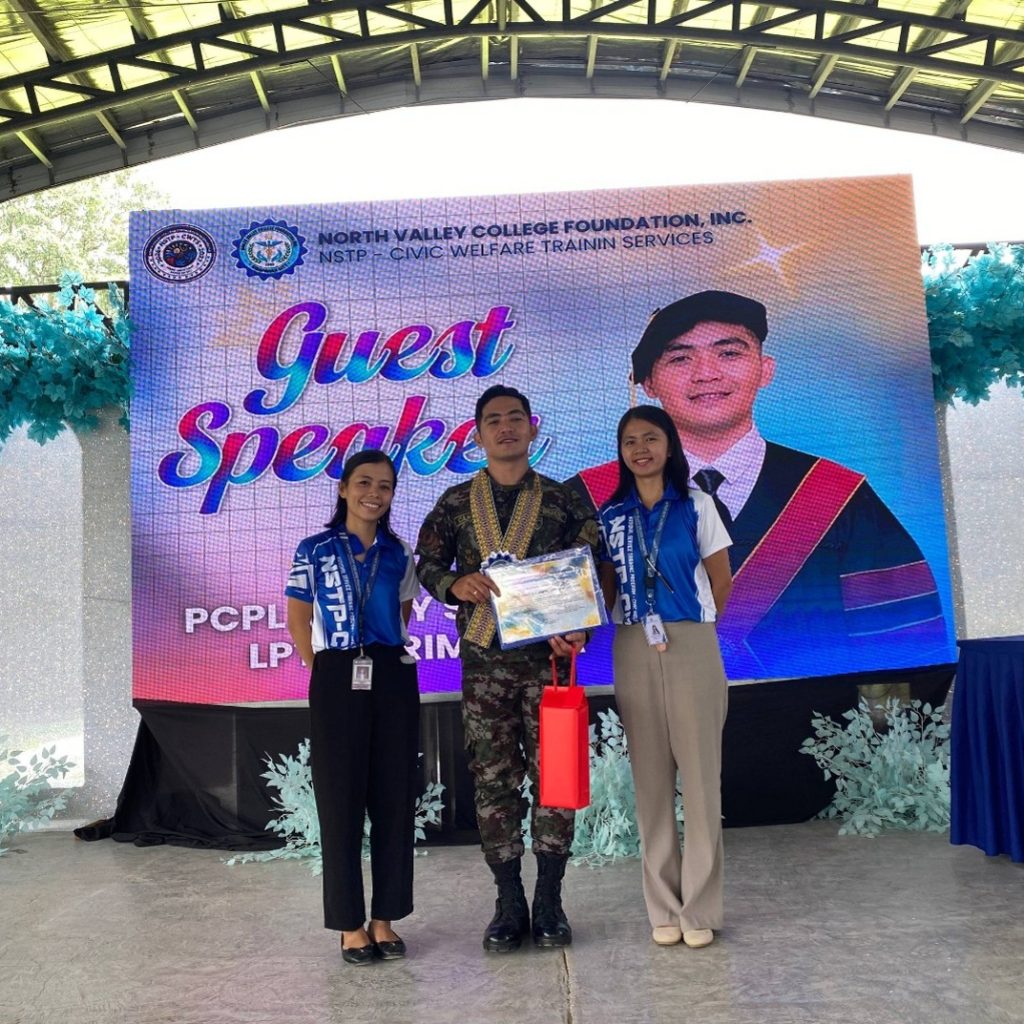
One of the forum’s resource persons was Police Corporal Raphy S. Cañete, LPT, RCrim, MPA, who engaged the participants on the importance of human rights, the rule of law, and the prevention of violent extremism and terrorism.
His discussion provided students with an opportunity to understand peace and security not simply from the perspective of law enforcement, but also from the standpoint of rights, responsibilities, and civic participation.
He likewise highlighted the role of young people as peace advocates, emphasizing the importance of responsible choices, awareness of social realities, and active participation in efforts that promote peaceful communities.
The discussion was particularly relevant to young people who increasingly encounter information, political and social narratives, and conflicting viewpoints through digital platforms. Developing critical awareness and a strong understanding of rights and responsibilities can help young people respond constructively to social challenges.
Mindanao is not a conflict zone, but a peace and knowledge zone
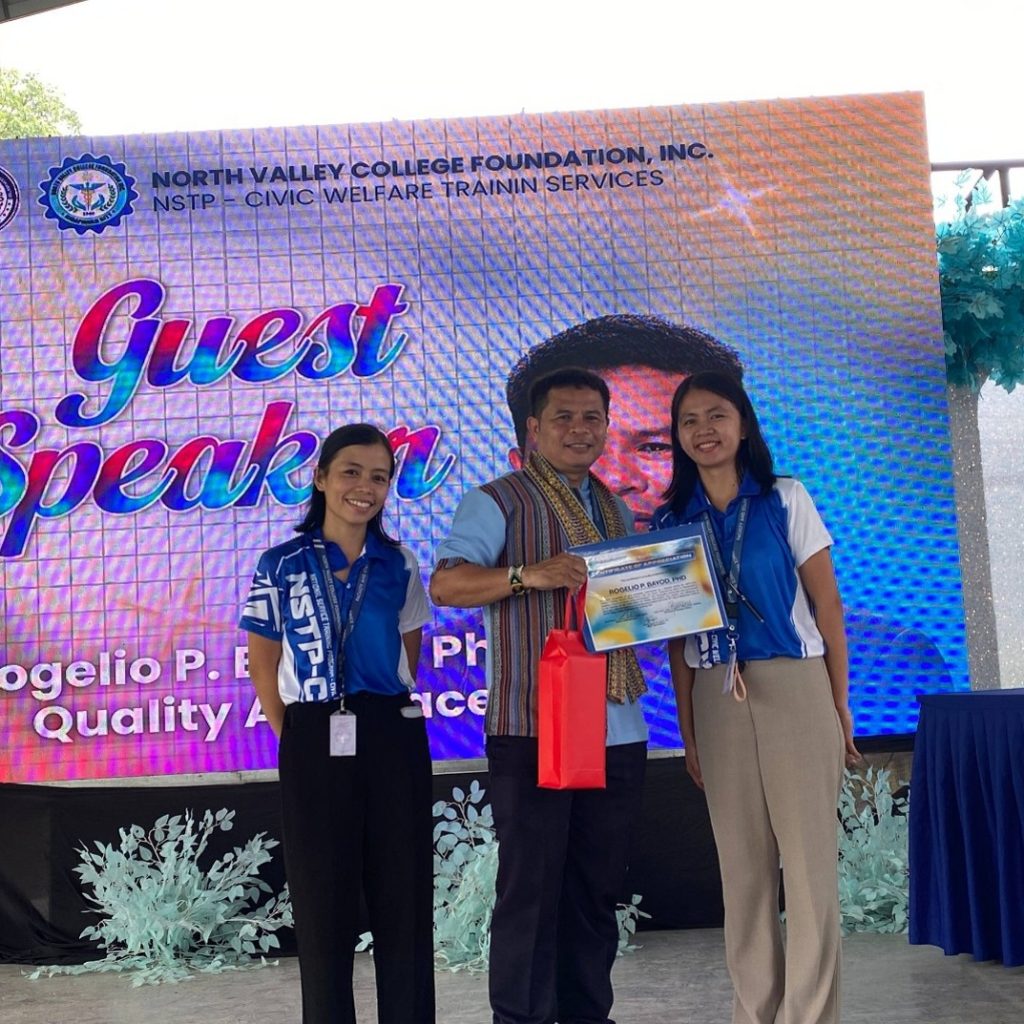
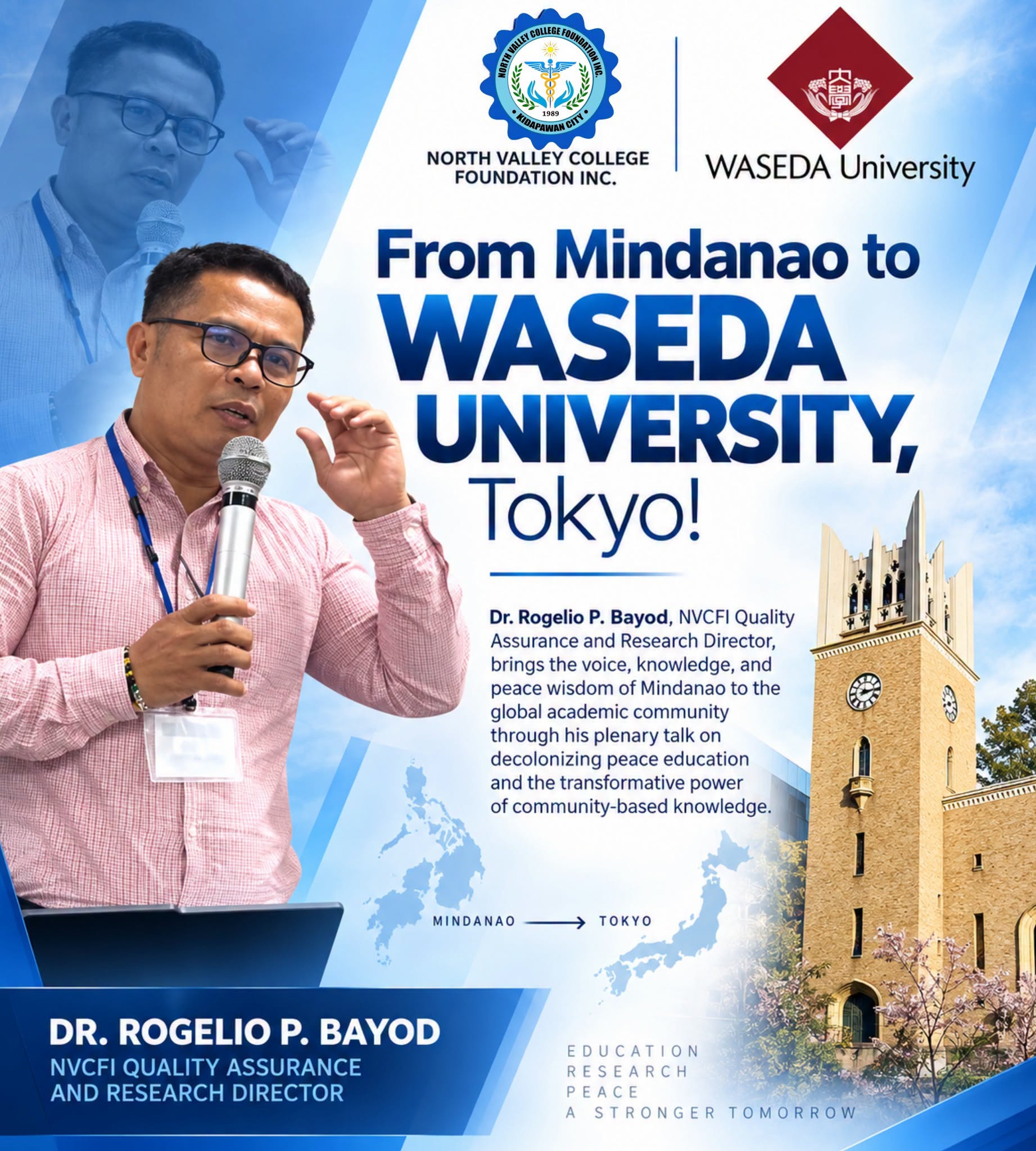
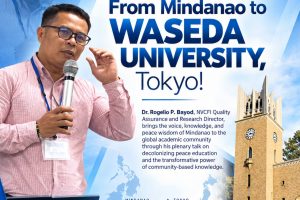
The second resource person was Dr. Rogelio P. Bayod of NVCFI, who discussed grassroots peace initiatives and the role of communities in building sustainable peace.
In his presentation, Bayod emphasized the importance of looking at peace not merely from the perspective of armed conflict or formal peace agreements, but also through the everyday experiences and initiatives of communities.
He underscored the need to change the dominant narrative about Mindanao, emphasizing that “Mindanao is not a conflict zone but a peace and knowledge zone.”
The statement invited students to see Mindanao beyond narratives that focus exclusively on violence and conflict. It encouraged them to recognize the region’s communities as spaces where people create knowledge, negotiate differences, preserve cultures, cooperate across social boundaries, and develop local mechanisms for peace.
Such a perspective places communities, not merely governments, institutions, or formal peace processes, at the heart of peacebuilding.
Grassroots peacebuilding recognizes that peace is also created through everyday relationships: dialogue among neighbors, community cooperation, respect for cultural differences, youth participation, inclusive governance, and collective responses to social problems.
Students become participants, not merely audiences
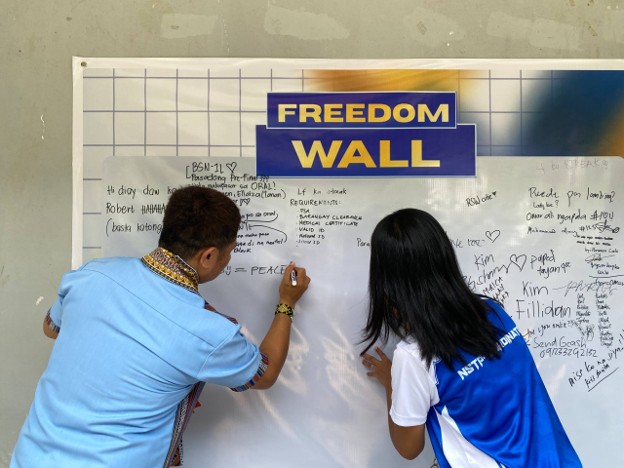
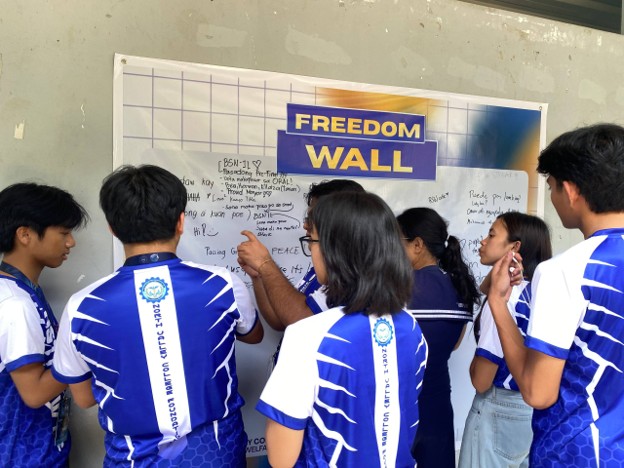
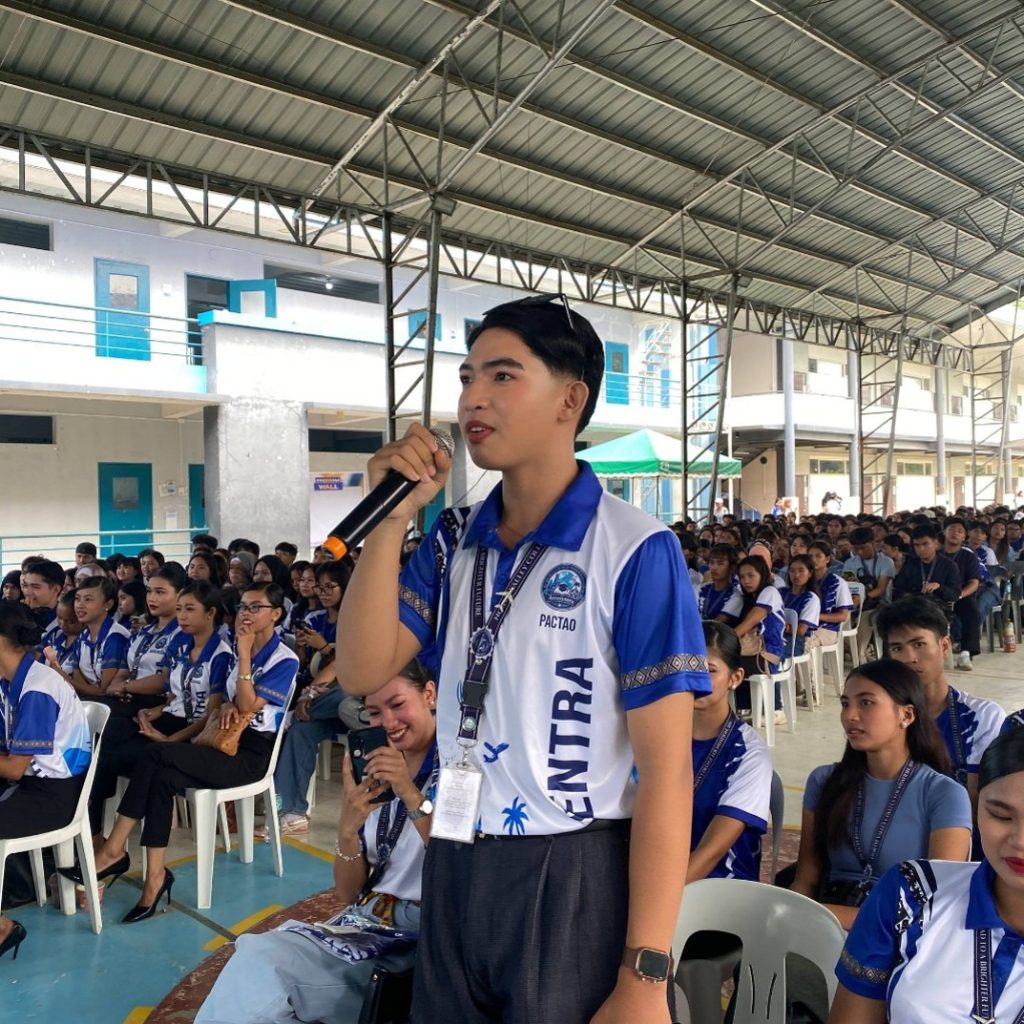
An important feature of the forum was the active participation of students.
Following the presentations, students raised critical questions and engaged the speakers in discussion, demonstrating that the forum was not simply a lecture but a space for dialogue and reflection.
Their participation reinforces an important principle in contemporary peacebuilding: young people should not be regarded merely as beneficiaries of peace programs. They can also be partners, advocates, innovators, and peacebuilders.
The United Nations Youth, Peace and Security framework specifically emphasizes meaningful youth participation, protection, prevention, partnerships, and the reintegration of young people affected by conflict.
NSTP faculty and student leaders: partners in peace education
The successful conduct of the activity was made possible through the collective efforts of the NSTP faculty, led by Ma’am Jhona Joy Paraon Bergado, and the NSTP student leaders, who ably assisted in the preparation and implementation of the forum.
Their collaboration demonstrates that peace education itself can become a practical exercise in leadership, teamwork, responsibility, and service.
Through activities such as the Peace Forum, students experience that building peace is not an abstract concept. It requires listening, dialogue, cooperation, critical thinking, respect for human dignity, and a willingness to engage difficult social issues.
Advancing NVCFI’s mission through peace and development
The activity is aligned with NVCFI’s commitment to providing quality education closer to thepeople and to forming graduates who can contribute meaningfully to their communities.
The Peace Forum likewise supports the institution’s broader aspirations to produce graduates who are socially conscious, ethically grounded, compassionate, community-oriented, and committed to justice and peace.
It also demonstrates the role of the academic institution as a knowledge partner of communities – a space where students, educators, practitioners, government personnel, and community stakeholders can come together to understand social problems and explore constructive responses.
Connecting peace education with the Sustainable Development Goals
The Peace Forum also contributes to several United Nations Sustainable Development Goals (SDGs):
- SDG 4 – Quality Education: The forum promotes education beyond technical knowledge by developing critical thinking, social awareness, citizenship, and values for sustainable development.
- SDG 5 – Gender Equality: Human rights and inclusive peacebuilding require recognition of the equal dignity and participation of women and men.
- SDG 10 – Reduced Inequalities: Discussions on human rights, inclusion, and grassroots participation help students understand social inequalities and the need for more inclusive communities.
- SDG 16 – Peace, Justice and Strong Institutions: This is the forum’s most direct SDG connection, particularly through its emphasis on human rights, rule of law, violence prevention, peacebuilding, and responsible citizenship.
- SDG 17 – Partnerships for the Goals: The collaboration among NVCFI, NSTP faculty and student leaders, resource persons, and community partners demonstrates how partnerships can strengthen peace and development initiatives.
The connection to SDG 16 is especially significant because peacebuilding is inseparable from justice, human rights, accountable institutions, and inclusive societies.
From awareness to action
Ultimately, the NVCFI Peace Forum reminds the academic community that peace education should not end when the forum ends.
The real measure of a peace forum lies in what students do with what they have learned, how they treat people who are different from them, how they respond to misinformation and harmful narratives, how they resolve disagreements, how they participate in their communities, and how they use their education to address social problems.
The forum’s message is therefore both simple and profound: young people are not merely the future of peace; they are already part of its making.
Through the annual “Empowering Youth Peace Builders” forum, NVCFI continues to create a learning environment where young people can ask difficult questions, understand complex social realities, engage in dialogue, and discover their capacity to become agents of peace, justice, and positive social transformation. As the United Nations emphasizes, meaningful youth participation is central to building peaceful and inclusive societies; young people bring lived experience, local knowledge, innovation, and leadership to peace and security challenges.